

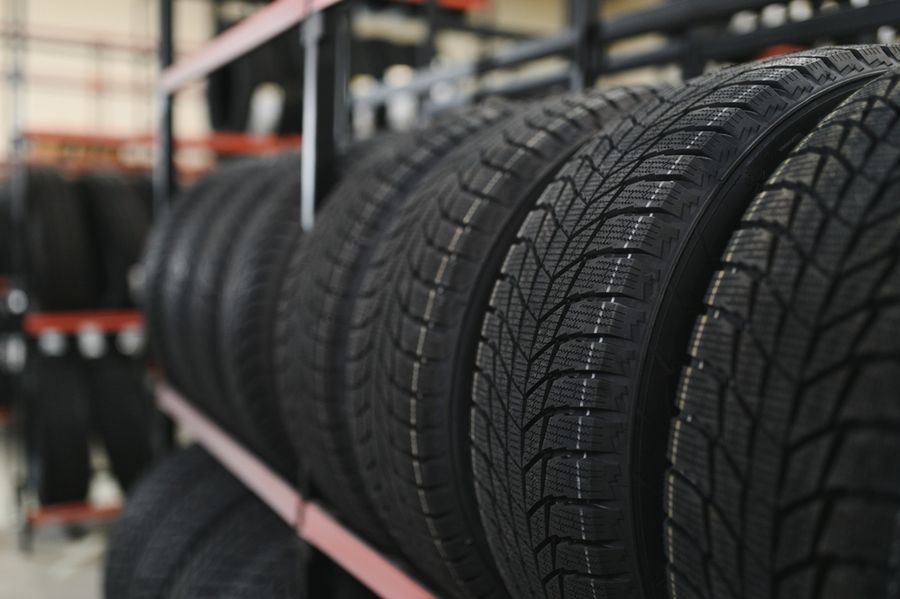
Walking into a tire shop or opening a tire retailer's website puts you in front of hundreds of options that all claim to handle well, last long, and deliver a smooth ride. The specs are real but rarely explained in terms of what they mean for your specific car and your specific routes. The fear of buying the wrong set and wasting money to find out is justified.
The 4 Criteria That Actually Matter
Tire comparison sites routinely surface eight or more factors. Four of them determine whether a tire actually fits your situation. Everything else is refinement.
Criterion 1: Your Actual Driving Conditions
This is the filter that should eliminate half your options before you look at a single price. The question is not what tire you prefer; it's what conditions your tires regularly face. A buyer in Phoenix navigating dry pavement most of the year needs a fundamentally different tire than a buyer in Minnesota who drives on packed snow for four months. Getting this wrong means spending money on capability you don't need or, worse, buying a tire that underperforms when conditions get serious.
The primary variables are climate (wet, dry, snowy, mixed), road surface (highway, city streets, unpaved), and mileage patterns (daily commuter, weekend driver, long-haul highway). These three inputs together define your category before you evaluate any specific product. A buyer who commutes 40 miles daily on wet Pacific Northwest highways has a different profile than someone who puts 5,000 miles a year on a dry-climate car.
We weigh this criterion first because it's the one most buyers skip. They assume all-season tires are always the right default without checking whether their climate actually calls for a dedicated winter tire for several months of the year, or whether they're overbuying traction capability for a region where it never snows.
Quick test: Write down the worst road condition you drive in at least once a month, and the surface type you drive on most. Use those two inputs to start narrowing your category.
Criterion 2: Tire Category Match
Once you know your conditions, you need a category that's built for them. The four main categories are all-season, winter (snow), summer (performance), and all-terrain. Each is engineered around a specific trade-off, and using a tire outside its intended conditions costs you either safety or longevity.
All-season tires are the practical default for drivers in mild to moderate climates with occasional rain and light winter weather. They're a genuine compromise, better than summer tires in cold temperatures but not as capable as dedicated winter tires on ice and packed snow. If you regularly drive on roads with more than light snow accumulation, all-season tires are not a substitute for winter tires, regardless of what the marketing implies.
Winter tires use a rubber compound that stays pliable below 45 degrees Fahrenheit, which is what gives them their grip advantage in cold conditions. Summer and performance tires use a stickier compound that works well in heat but hardens in cold weather, reducing traction. All-terrain tires are built for trucks and SUVs that regularly leave paved roads; putting them on a commuter car adds noise and rolling resistance without any benefit. Matching the category to your conditions is the decision with the highest safety stakes.
Quick test: If you live somewhere that regularly gets below freezing with snow or ice between November and March, ask yourself honestly whether you're running the right tire category for that window.
Criterion 3: Treadwear Rating and Long-Term Value
The UTQG (Uniform Tire Quality Grading) system gives every tire a treadwear number, a traction grade, and a temperature grade. The treadwear number is an index, not a mileage guarantee, but it's a reliable comparative signal. A tire rated 600 is expected to last roughly twice as long as one rated 300 under the same standardized test conditions. A tire with a treadwear rating under 300 is almost certainly a performance-focused tire trading longevity for grip.
For most daily drivers, a treadwear rating in the 500 to 700 range offers a reasonable balance of durability and performance. Tires with manufacturer treadwear warranties of 60,000 to 80,000 miles fall into this band. Higher-rated tires often sacrifice some wet traction for longevity, which is a trade-off worth understanding before assuming more mileage means better.
Price per mile of expected tread life is a more honest comparison metric than sticker price. A $180 tire rated for 65,000 miles costs less per mile than a $130 tire rated for 30,000 miles. Running that math across four tires before you decide is a habit that consistently changes which option looks like the better value.
Quick test: Find the treadwear rating and any manufacturer mileage warranty for the tires you're comparing, then calculate cost per thousand miles to put the price difference in real terms.
Criterion 4: Load Index and Speed Rating
Every tire has a load index and a speed rating printed on its sidewall. The load index tells you the maximum weight the tire can support; the speed rating tells you the maximum sustained speed it's certified for. These are safety specifications, not preferences. Installing a tire with a lower load index than your vehicle requires puts you outside the vehicle's certified safe operating range.
Your vehicle's door placard (usually on the driver's side door frame) lists the minimum required tire size, load index, and often the speed rating. Any replacement tire must meet or exceed those specifications. Going above them is generally fine. Going below them is a safety and liability issue, and in some states it can affect your insurance coverage in an accident.
Speed ratings range from S (112 mph) through V (149 mph) and beyond. For most passenger vehicles driven on public roads, an S or T rating is sufficient. High-performance vehicles and sports cars often require H or V ratings; check your placard before assuming standard ratings apply.
Quick test: Pull up the door placard on your vehicle and write down the minimum load index and speed rating listed. Verify any tire you're considering meets those numbers before looking at anything else.
What Most People Get Wrong
The most common mistake is buying tires primarily on brand familiarity without checking whether the specific model within that brand fits the category and conditions they need. Major brands make tires across every category and quality tier. A well-known name on a budget all-season model doesn't automatically make it the right tire for a high-mileage commuter in a wet climate. Brand matters for quality floors and warranty reliability; it doesn't substitute for category fit.
The second mistake is treating all-season tires as a universal solution. They're the right choice for a large share of American drivers, but not all of them. Buyers in the upper Midwest, New England, and mountain states who use a single set of all-season tires year-round are accepting a real capability gap during winter months. The safety case for a dedicated winter tire swap in those climates is well established. The inconvenience of swapping twice a year is real, but so is the performance difference on ice.
Three Situations, Three Different Right Answers
If you drive a sedan in a Sun Belt state with occasional highway miles and no meaningful winter weather: A quality all-season tire with a treadwear rating in the 600-plus range is the right call. Don't pay extra for all-weather or winter-rated features you won't need. Prioritize treadwear value and wet traction grades, and plan for a 60,000 to 70,000-mile service life.
If you drive an SUV in Colorado or the Upper Midwest and keep the same tires year-round: Stop. A dedicated set of winter tires mounted on a spare set of steel wheels is worth the upfront cost if you're regularly driving in snow and ice. All-season tires, including tires marketed as "all-weather," carry a three-peak mountain snowflake symbol only on specific models, and not all all-season tires earn it. Check the symbol before assuming your current tires qualify.
If you drive a performance-oriented car on mostly dry roads and want responsive handling over maximum tread life: A summer or ultra-high-performance all-season tire with a lower treadwear rating is a reasonable trade-off. Expect to replace tires more frequently (25,000 to 40,000 miles is common), factor that into your budget, and confirm the speed rating matches your vehicle's requirement before buying.
What You'll Actually Pay
Entry-level tires from mainstream brands for standard passenger cars typically run $80 to $120 per tire. Mid-range all-season tires from reputable manufacturers land between $120 and $180 per tire. Premium tires with higher treadwear ratings, better wet traction grades, or performance-focused compounds run $180 to $280 per tire. Multiply by four and add installation, balancing, and disposal fees to get your real out-the-door cost.
Winter tires, if you buy a second set, add the cost of mounting hardware. A set of four steel wheels for winter use typically runs $200 to $400 total, and many buyers find the swap pays for itself in extended tread life on both sets by not subjecting summer rubber to cold temperatures.
All-terrain tires for trucks and SUVs typically cost more than standard passenger tires, running $150 to $300 per tire at mid-range, with heavy-duty options pushing higher. Their higher rolling resistance also reduces fuel efficiency slightly, which is a real long-term cost that doesn't show up in the sticker price.
Frequently Asked Questions
Do I need to replace all four tires at once?
Ideally, yes, especially on all-wheel-drive vehicles where mismatched tread depths can stress the drivetrain. On front-wheel-drive or rear-wheel-drive vehicles, replacing in pairs (both fronts or both rears together) is the minimum recommended approach. Replacing a single tire on a vehicle where the other three have significant wear creates a handling imbalance.
How do I know when my tires actually need replacing?
Tread depth is the primary measure. A tread depth below 2/32 of an inch is the legal minimum in most states; most safety organizations recommend replacing tires at 4/32 of an inch. The penny test (Lincoln's head disappears = 2/32) and quarter test (Washington's head disappears = 4/32) are reliable quick checks. Age also matters: tires over six years old should be inspected by a professional regardless of tread depth, and most manufacturers recommend replacement at 10 years regardless of condition.
Is it worth buying tires from a warehouse club vs. a dedicated tire shop?
Both can be good options depending on what you value. Warehouse clubs typically offer competitive per-tire pricing with installation included. Dedicated tire shops often provide broader selection, more technical expertise for matching tires to vehicles, and more flexible service scheduling. For a straightforward replacement of a common tire size, either works. For a more complex fitment decision or a less common vehicle, a specialist shop is often worth the slight price difference.
Run the Four Criteria, Then Decide
When you're ready to compare specific models, run each candidate through the four criteria in order: does it fit your conditions, is it the right category, does the treadwear value make sense at that price, and does it meet your vehicle's load and speed requirements? Any tire that clears all four is worth serious consideration regardless of brand.
We created this article in conjunction with AI technology, then made sure it was fact-checked and edited by a TopicTangent editor.