

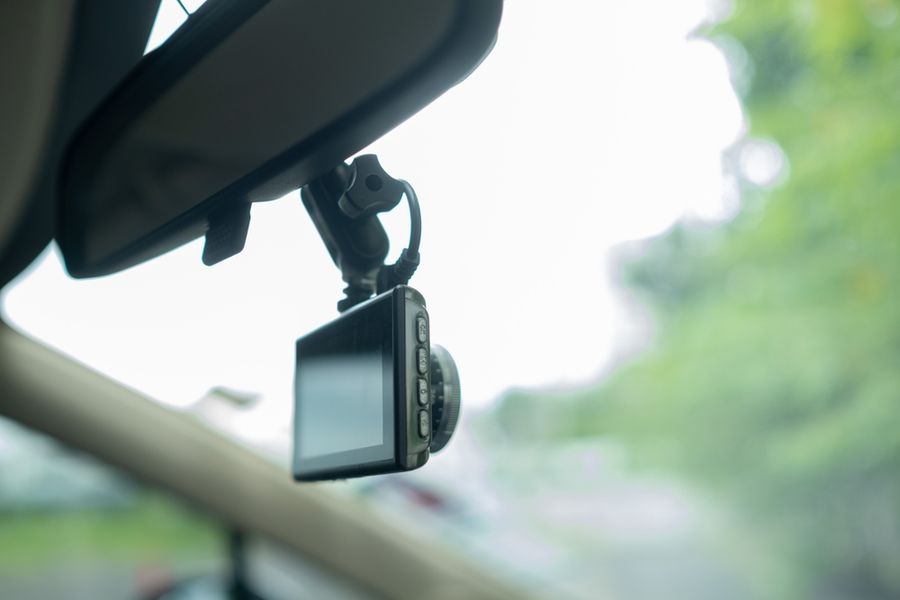
The dash cam market has flooded with look-alike units at every price point, and the spec sheets are nearly useless for making a real decision: every model claims "crystal clear 4K" and "superior night vision," even the cheap ones. What separates a dash cam that holds up in a real incident from one that corrupts its footage on a hot afternoon comes down to a short list of factors most buying guides gloss over.
At a Glance: Dash Cams Compared
|
Rank |
Option |
Best For |
Starting At |
Standout Feature |
|---|---|---|---|---|
|
1 |
Garmin Dash Cam 67W |
Most everyday drivers |
180-degree wide angle, voice control |
|
|
2 |
Vantrue N2 Pro |
Rideshare and delivery drivers |
Dual lens: front plus IR interior |
|
|
3 |
BlackVue DR900X-2CH |
Unattended parking, cloud access |
4K front, remote cloud footage |
|
|
4 |
Garmin Dash Cam Mini 3 |
Discreet install, low-clutter windshield |
Built-in Clarity polarizer, key-sized |
|
|
5 |
Nextbase 622GW |
Solo and long-distance drivers |
Built-in emergency SOS, 4K |
The 5 Best Dash Cams Right Now
These models were chosen because each one solves a specific real-world problem rather than competing on the same overlapping spec claims. Front-facing resolution matters less than most buyers think. What actually protects you in a dispute is a camera that records reliably, stores the file cleanly, and captures a readable license plate in low light.
1. Garmin Dash Cam 67W: Best Overall
The 67W earns the top spot because Garmin's track record in GPS hardware translates directly to reliable embedded systems in their cameras: the firmware is stable, loop recording is consistent, and the unit handles heat better than most competitors at this price. The 180-degree wide-angle lens captures adjacent lanes and nearby intersections in a single frame, which matters in multi-vehicle incidents where the full scene is what settles the claim. The honest limitation: Garmin's companion app is functional but not polished, and there is no built-in rear camera option.
Pros:
- 180-degree field covers lanes and intersections
- Voice control keeps hands on the wheel
- Proven heat tolerance and stable firmware
Cons:
- No rear camera channel included
- App interface lags behind competitors in polish
Best for: A daily commuter in heavy traffic or multi-lane highway driving who needs a trustworthy single-channel camera that captures the full scene without managing a second unit.
2. Vantrue N2 Pro: Best for Rideshare and Delivery Drivers
The N2 Pro has two lenses: one forward-facing, one pointing into the cabin, both with infrared night vision for the interior view. For anyone carrying passengers or making deliveries, interior footage is the difference between having evidence in a dispute and having nothing. The tradeoff is a larger windshield footprint and a more involved installation than single-lens units.
Pros:
- IR interior camera performs in complete darkness
- Front and cabin footage records simultaneously
- Strong low-light performance on both channels
Cons:
- Larger mount than single-lens cameras
- Two cables to manage during installation
Best for: An Uber, Lyft, or delivery driver who needs documented proof of what happens inside and outside the vehicle during every shift.
3. BlackVue DR900X-2CH: Best for Parking Surveillance and Cloud Access
The DR900X-2CH records in 4K on the front channel and streams footage to BlackVue's cloud platform, meaning you can pull clips remotely without touching the SD card. It's parking mode, when paired with a hardwire kit, monitors the vehicle with the engine off and logs triggered events. This is the camera for someone who parks in public lots or on city streets regularly and needs documentation of incidents that happen when they are not in the car. Full remote access requires a subscription, and the upfront cost is the highest on this list.
Pros:
- 4K front channel captures plate detail at distance
- Remote cloud access without physically handling the camera
- Parking mode records triggered events with the engine off
Cons:
- Full cloud features require a paid subscription
- Highest upfront cost on this list
Best for: A driver who regularly parks on city streets or in unmonitored lots and wants remote access to footage of incidents that happen while the car is unattended.
4. Garmin Dash Cam Mini 3: Best Compact Pick
The Mini 3 is roughly the size of a car key, mounts cleanly behind the rearview mirror, and is virtually invisible from outside the vehicle. Where the previous Mini generation was a straightforward compact recorder, the Mini 3 adds two meaningful upgrades: a built-in Garmin Clarity polarizer that reduces windshield glare in the recorded footage, and voice control so you can save clips or toggle audio recording without taking your hands off the wheel. It records in 1080p with a 140-degree field of view, handles automatic incident detection, and benefits from the same reliable Garmin firmware as the 67W. Parking Guard and Live View monitoring are available but require a paid Vault subscription and a constant power connection.
Pros:
- Built-in polarizer reduces glare for clearer footage
- Key-sized profile is virtually invisible on the windshield
- Voice control is included at this size and price
Cons:
- No screen: app or card removal required to review footage
- Parking Guard and Live View require a paid Vault subscription
Best for: A driver in a leased vehicle or shared family car who wants a discreet, low-profile install with genuinely better glass optics than a standard compact camera at the same price.
5. Nextbase 622GW: Best for Solo and Long-Distance Drivers
The 622GW records in 4K and includes a built-in emergency SOS feature: if the camera detects a severe impact and the driver does not respond within a set window, it sends the vehicle's GPS coordinates and a distress alert to a designated emergency contact. For solo drivers on long highway stretches or rural roads, that feature has genuine safety value beyond recording footage. A rear-facing camera module is available separately. The SOS feature requires configuring an emergency contact through the Nextbase app before it functions.
Pros:
- Emergency SOS sends the GPS location after a detected impact
- 4K recording with strong low-light performance
- Rear camera module available as an add-on
Cons:
- Emergency SOS requires app setup before it works
- Higher price for a single-channel unit
Best for: Someone who drives alone regularly on long rural routes or overnight highway runs where an automated emergency alert could matter in a worst-case scenario.
What Didn't Make the Cut
The VIOFO A129 Pro Duo is widely recommended on automotive forums and frequently appears on Amazon "best of" lists, but we left it off because app support is inconsistent and build quality varies noticeably between production runs in a way that more established brands do not. Footage quality is competitive on paper, but long-term reliability over 12 to 18 months is harder to predict. If you are comfortable with a more hands-on ownership experience and want strong specs for the price, it is worth researching, but it did not meet the consistency standard for this list.
Editor's Pick
The Garmin Dash Cam 67W is the right camera for the widest range of everyday drivers because its 180-degree field and proven hardware reliability give you the two things that actually matter in a real incident: complete scene coverage and footage you can trust was recorded. That said, if you carry passengers or drive for a rideshare platform, the Vantrue N2 Pro is the stronger pick because no single-lens camera can document the inside of your cabin.
What You'll Actually Pay
Basic single-channel dash cams start around $50 to $80, but most models in that range use lower-grade capacitors that struggle in summer heat, and low-light performance is often inadequate for insurance use. These work for light documentation but not for protection in a real incident.
The practical mid-range sits between $100 and $200, and that is where most everyday drivers should focus. Models here offer reliable loop recording, automatic incident detection, and solid low-light video. Budget an additional $15 to $30 for a high-endurance microSD card rated for continuous recording. Standard cards wear out faster under constant loop recording and are a common point of failure that has nothing to do with the camera itself.
Premium models ($250 and above) add 4K resolution, dual-channel front and rear recording, parking mode, and, in some cases, cloud connectivity. If you need rear coverage or parking surveillance, budget at least $250 to $350 for a system that does both well.
How to Choose the Right Dash Cam for You
Start with your primary risk scenario. If you are most concerned about front-end collisions and insurance disputes from your own driving, a single wide-angle front camera handles that well. If you carry passengers, make deliveries, or have had incidents involving your parked car, you need either an interior channel or parking mode, and that narrows the field immediately.
Next, think about where your car sits overnight. If it parks in a private garage, parking mode is a low-priority feature. If it sits on city streets or in unmonitored lots, a camera without parking mode leaves you with no coverage during the hours your car is most exposed. A hardwire kit enables parking mode on cameras that support it and is a required purchase if that feature matters to you.
Finally, be honest about your setup tolerance. A dash cam that requires running a cable to the fuse box and configuring a cloud account is a different installation than one that plugs into the cigarette lighter in five minutes. Both are valid options, but an unconfigured $350 camera sitting in your glove box protects nobody.
Frequently Asked Questions
Do dash cams record when the car is off?
Only if the camera is wired to a constant power source through a hardwire kit rather than the accessory port that shuts off with the ignition. Some dash cams support parking mode, but the feature is inactive unless the camera is hardwired.
Will hardwiring a dash cam void my car warranty?
Under the Magnuson-Moss Warranty Act, an aftermarket accessory generally does not void a warranty unless it directly causes a failure. Hardwiring a dash cam to a fuse tap carries minimal risk when done correctly. If you are not comfortable with fuse box work, you can opt for a professional installation at a car audio shop.
Does video resolution actually matter for insurance claims?
Less than most buyers expect. A 1080p camera with a wide field of view and good low-light performance produces more useful evidence than a 4K camera with a narrow lens and poor night sensitivity. What insurers and attorneys need is a readable license plate, a clear view of the point of impact, and a reliable timestamp. Resolution is secondary to lens quality and recording consistency.
The Verdict
The Garmin Dash Cam 67W is the right camera for most drivers because its 180-degree lens and proven thermal reliability give you complete scene coverage and footage you can count on, not just under ideal conditions. For a purchase you hope you never actually need, that combination earns the top spot without reservation.
We created this article in conjunction with AI technology, then made sure it was fact-checked and edited by a TopicTangent editor.