

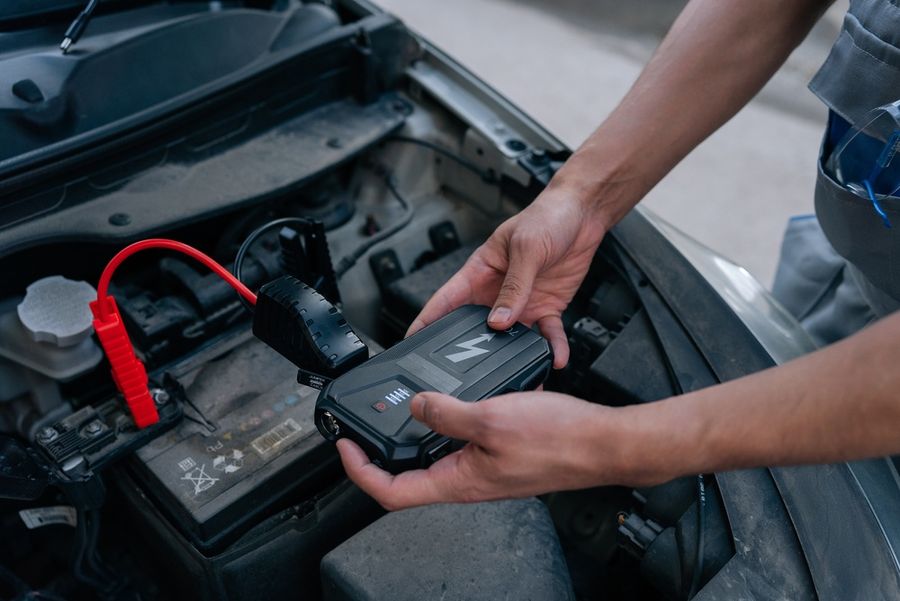
A drained car battery rarely picks a convenient moment. It happens in parking lots after dark, in sub-zero temperatures, or miles from the nearest service station. A jump starter gives you the ability to restart your own vehicle without flagging down a stranger or waiting for a tow. The challenge is that the market is crowded with options that look similar on the shelf but perform very differently under real conditions, especially when cold weather and infrequent use enter the picture.
Understanding the Different Types of Portable Jump Starters
Not all portable jump starters are designed for the same vehicles. Choosing the wrong model can leave you with insufficient power when you need it most. The right choice depends largely on the size and type of engine you drive.
Portable lithium-ion jump starters are the most common option for everyday drivers. They're compact, lightweight, and often small enough to fit in a glove box. Most work well for four-cylinder and six-cylinder engines commonly found in sedans, compact SUVs, and crossovers. Many also include USB charging ports and built-in flashlights.
Lead-acid jump starters are much larger and heavier but offer significantly more power. They're often preferred for trucks, large SUVs, RVs, and vehicles with V8 engines. Some include air compressors and additional power outlets.
Ultracapacitor jump starters use advanced capacitor technology instead of traditional batteries. They're known for excellent durability and performance in extreme temperatures but tend to cost more than other options.
As a general rule:
- Compact cars and sedans: 400 to 1,000 peak amps
- Mid-size SUVs and V6 engines: 800 to 1,500 peak amps
- Large V8 engines: 1,500+ peak amps
- Diesel engines: 2,000+ peak amps recommended
- Heavy-duty trucks and commercial vehicles: 3,000+ peak amps
A jump starter that works perfectly for a four-cylinder commuter car may struggle with a diesel pickup or large SUV, making engine size one of the most important buying considerations.
Top Portable Jump Starters Ranked
|
Rank |
Jump Starter |
Best For |
Standout Feature |
|---|---|---|---|
|
1 |
Clore Jump-N-Carry JNC325 |
Most drivers and everyday vehicle owners |
Excellent balance of power, portability, and reliability |
|
2 |
GOOLOO GT6000 |
Large gas and diesel engines |
Massive 6,000-amp output for demanding vehicles |
|
3 |
NOCO Boost Plus GB40 |
Compact storage and emergencies |
Extremely portable design that fits almost anywhere |
|
4 |
TopDon V1200Air |
Drivers who want extra utility |
Built-in tire inflator alongside jump-starting capability |
|
5 |
AstroAI S8 Ultra |
Budget-conscious shoppers needing serious power |
High output at a reasonable price point |
Clore Jump-N-Carry JNC325
The Clore Jump-N-Carry JNC325 earns the top spot because it combines strong performance with practical portability. Its 2,000-amp output provides enough power for most passenger vehicles while remaining compact enough to store in a trunk. Long cables make it easier to reach difficult battery locations, and the simple controls eliminate confusion during an emergency. It's one of the most balanced options available for everyday drivers.
Pros
- Strong 2,000-amp peak output
- Long 24-inch cables
- Easy-to-use controls
- Compact design
Cons
- More expensive than some competitors
- May be more power than small cars require
GOOLOO GT6000
Drivers of trucks, large SUVs, and diesel-powered vehicles should give the GOOLOO GT6000 serious consideration. With a massive 6,000-amp peak rating, it can handle demanding engines that would overwhelm many smaller jump starters. It also doubles as a portable power bank and features a bright LED flashlight for nighttime emergencies. Despite its larger size, it remains portable enough for most vehicles.
Pros
- Extremely powerful output
- Suitable for large diesel engines
- Functions as a power bank
- Durable construction
Cons
- Bulkier than compact competitors
- Display can be difficult to read in bright light
NOCO Boost Plus GB40
The NOCO Boost Plus GB40 is proof that portability doesn't always require sacrificing capability. Weighing only about two pounds, it can easily fit in a glove compartment or under a seat. It's designed for drivers who want emergency protection without dedicating much storage space. The simple interface and compact size make it especially attractive for commuters and city drivers.
Pros
- Extremely compact design
- Lightweight and easy to store
- User-friendly interface
- Includes integrated work lights
Cons
- Short cable length
- Limited capacity for repeated jump starts
TopDon V1200Air
The TopDon V1200Air offers something many competitors don't: a built-in tire inflator. For drivers who value multi-purpose emergency equipment, that feature alone can make it worth considering. The unit remains relatively lightweight and portable while providing enough power for most cars and smaller SUVs. Having both a jump starter and an inflator in one package can save space and reduce the number of emergency tools you need to carry.
Pros
- Integrated tire inflator
- Lightweight design
- Excellent storage case
- Strong overall value
Cons
- Short jumper leads
- Clamps feel less robust than premium models
AstroAI S8 Ultra
The AstroAI S8 Ultra delivers impressive power for its size and price. With a peak rating of 4,000 amps, it offers enough muscle for many larger vehicles while remaining portable. It's also equipped with USB charging capabilities and an LED flashlight, making it useful beyond battery emergencies. Drivers looking for a combination of affordability and strong performance often find it to be an appealing option.
Pros
- High power output
- Good value for the money
- Compact storage size
- Works with larger engines
Cons
- Clamp quality could be better
- Controls can be difficult to use with gloves
Our Recommended Pick
If we had to choose just one portable jump starter for the average driver, the Clore Jump-N-Carry JNC325 would earn the nod. It strikes an excellent balance between power, portability, reliability, and ease of use. With 2,000 peak amps, it has enough starting power for most cars, SUVs, and light trucks without being oversized or difficult to store.
Its long cables, straightforward controls, and strong real-world performance make it a dependable option for both experienced vehicle owners and first-time jump starter buyers. While there are more powerful models available, most drivers simply don't need that extra capacity. For everyday peace of mind and all-around value, the JNC325 is the jump starter we'd be most comfortable recommending to keep in your trunk year-round.
Features That Matter Before You Buy
Many shoppers focus exclusively on peak amperage, but several other factors deserve attention. Battery capacity, cable length, safety features, and charging options can all affect real-world usability. A jump starter with slightly lower power but better cables and protection systems may prove more useful than a higher-powered model with poor ergonomics.
Safety features are particularly important. Look for reverse polarity protection, spark-proof technology, overcharge protection, and short-circuit safeguards. Modern vehicles contain sensitive electronics, and quality protection systems help reduce the risk of accidental damage during use.
Maintenance Tips for Reliable Performance
A portable jump starter won't help much if it's dead when you need it. Most manufacturers recommend recharging units every three months, even if they haven't been used. Regular charging helps maintain battery health and ensures maximum performance during an emergency.
Storage also matters. Excessive heat and cold can shorten battery life over time. Whenever possible, store the jump starter in a cool, dry environment. If it must remain in a vehicle, periodically check its charge level and inspect cables for signs of wear or damage.
Frequently Asked Questions
Can a jump starter damage my car's electronics? Incorrectly connected jump starters, or older units without protection circuitry, can send current in a way that damages sensitive electronics. Smart-clamp units reduce this risk by detecting polarity before allowing current to flow. Regardless of the unit type, always connect the negative cable to a grounded unpainted metal surface away from the battery, not directly to the battery's negative terminal.
How often should I recharge my jump starter when I'm not using it? Most lithium-ion jump starters lose charge over time, even when sitting idle. Recharging every few months prevents the battery from dropping below the threshold needed to deliver a reliable start. Many units include a charge-level indicator, which makes it easy to check before a trip rather than relying on memory.
Do jump starters work in very cold weather? Cold weather is one of the most significant performance variables for any lithium-based jump starter. As temperatures drop below freezing, lithium batteries lose effective output capacity. A unit left in a frozen car overnight may deliver noticeably less power than the specifications suggest. Warming the jump starter indoors before use in extreme cold restores closer to full output, and some manufacturers specifically recommend this before attempting a cold-weather start.
A Small Tool That Can Save a Big Headache
Portable jump starters have evolved from bulky emergency equipment into compact devices capable of starting vehicles quickly and safely. Whether you drive a small commuter car, a family SUV, or a heavy-duty diesel truck, there are models designed to match your needs.
The best choice ultimately depends on your vehicle, storage space, and desired features. For most drivers, the Clore Jump-N-Carry JNC325 offers the strongest overall combination of power and portability, while specialized options like the GOOLOO GT6000 or NOCO GB40 may be better suited for specific situations. Whatever model you choose, keeping a jump starter in your vehicle can provide peace of mind every time you hit the road.
We created this article in conjunction with AI technology, then made sure it was fact-checked and edited by a TopicTangent editor.