

Turning a spare corner into a real workout space sounds simple until you realize most fitness equipment assumes you have a garage. If you are working with a studio apartment, a shared bedroom, or a single spare room, the wrong gear turns your home into an obstacle course. By weighing factors such as storage footprint, exercise versatility, and price, you can choose the right tools for your workouts.
At a Glance: Compact Home Workout Tools Compared
|
Rank |
Option |
Best For |
Standout Feature |
|---|---|---|---|
|
1 |
Adjustable Dumbbells |
Total-body strength |
Weight range |
|
2 |
Resistance Bands |
Tight budgets |
Easy storage |
|
3 |
Exercise Mat |
Floor training |
Joint comfort |
|
4 |
Suspension Trainer |
Bodyweight strength |
Door setup |
|
5 |
Foldable Bench |
Strength upgrades |
Angle support |
The 5 Best Compact Home Workout Tools Right Now
These five tools cover strength, mobility, core work, and low-impact training without taking over a bedroom or living room. A good setup should support a quick 20-minute session, not require moving furniture every time
1) Adjustable Dumbbells: Best Overall
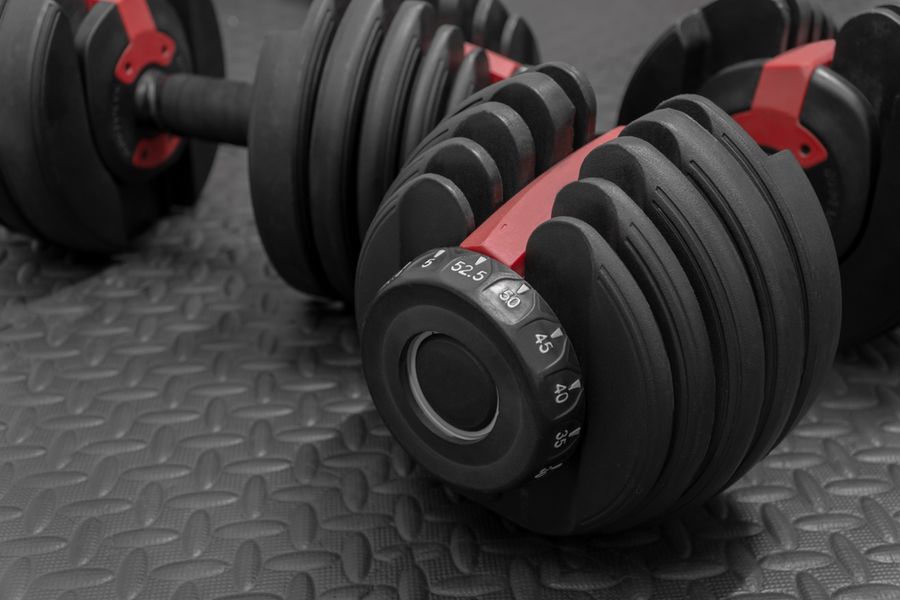
Adjustable dumbbells are the clear top pick because they replace several pairs of fixed weights. A single set can support squats, presses, rows, lunges, curls, and loaded core work in very little space. The honest drawback is cost, since well-made sets can be expensive upfront. Still, they offer the best balance of strength training, storage, and long-term use for most compact home gyms.
Pros:
- Replaces many weights
- Great for progression
- Full-body exercise range
Cons:
- Higher upfront cost
- Can feel bulky
Best for: Someone with one small workout corner who wants serious strength training without buying a full rack of weights.
2) Resistance Bands: Best for Budget Setups
Resistance bands are the cheapest way to add useful training options to a small home space. They fit in a drawer, travel well, and work for rows, presses, glute work, mobility drills, and warmups. They do not feel exactly like free weights, and some people outgrow lighter bands fast. Look for a set with several resistance levels so you can adjust the challenge without replacing everything.
Pros:
- Very affordable
- Stores anywhere
- Good for warmups
Cons:
- Can snap eventually
- Limited heavy loading
Best for: Someone starting at home with little space and a small budget who wants flexible workouts before buying heavier gear.
3) Exercise Mat: Best for Floor Training
An exercise mat may seem basic, but it makes home workouts more comfortable and consistent. It gives your knees, wrists, back, and hips a defined surface for planks, stretching, Pilates-style movements, and bodyweight strength. A mat will not build strength by itself, so pair it with bands or dumbbells for a fuller setup. Choose one that grips the floor and rolls up tightly.
Pros:
- Protects joints
- Defines workout space
- Easy to clean
Cons:
- No resistance added
- Cheap mats wear fast
Best for: Someone exercising in an apartment, bedroom, or shared living space where comfort and quick cleanup matter.
4) Suspension Trainer: Best for Bodyweight Strength
A suspension trainer turns a door, beam, or wall anchor into a compact strength station. It works well for rows, assisted squats, chest presses, hamstring curls, and core exercises. The big advantage is scalability, since changing your body angle changes the difficulty. The limitation is setup, because you need a safe anchor point and enough room to lean back or step forward.
Pros:
- Uses body weight
- Packs very small
- Scales by angle
Cons:
- Needs secure anchor
- Learning curve exists
Best for: Someone who wants challenging strength work but cannot store weights or use loud equipment.
5) Foldable Bench: Best for Strength Upgrades
A foldable bench is not the first item every compact home gym needs, but it becomes valuable once you train with dumbbells often. It opens up chest presses, supported rows, step-ups, seated shoulder presses, and incline movements. The tradeoff is storage, since even folding models need more room than bands or a mat. Choose a sturdy bench before choosing extra padding or fancy attachments.
Pros:
- Expands dumbbell workouts
- Supports better positions
- Folds for storage
Cons:
- Takes floor space
- Quality varies widely
Best for: Someone who already owns weights and wants more exercise variety without buying a large machine.
What Didn’t Make the Cut
A treadmill is popular, but it did not make this list because most models take too much space for a truly compact setup. Walking pads are smaller, but they mainly support cardio and do not replace strength tools. For most home users, dumbbells, bands, and a mat deliver more workout variety per square foot.
Editor’s Pick: Adjustable dumbbells earn the top spot because they support the widest range of strength moves in the smallest practical footprint. That said, resistance bands are the smarter first buy if you are testing a home workout routine and want to keep spending low.
What You’ll Actually Pay
For a starter compact setup, expect to pay about $50 to $150 if you choose resistance bands, a decent mat, and one or two small accessories. This is enough for beginner strength, stretching, core work, and light conditioning.
A stronger long-term setup usually lands closer to $200 to $600, mostly because adjustable dumbbells and a foldable bench raise the total. Higher prices often reflect sturdier adjustment systems, better grips, stronger frames, and longer useful life.
Avoid buying everything at once. Start with the tool that solves your biggest problem, then add the next piece only after you know what your workouts are missing.
How to Choose the Right Compact Workout Tools for You
If your goal is strength, lean toward adjustable dumbbells first. If your goal is movement, stretching, and basic consistency, start with a mat and bands. If you live above neighbors or share walls, skip jumping-based gear and choose quiet tools you can control.
If you have only a closet shelf, prioritize bands, a mat, and a suspension trainer. If you have a permanent corner, dumbbells and a foldable bench make more sense. The best compact setup is the one you can leave ready enough to use without a long setup.
If you are working out in a one-bedroom apartment after work, choose resistance bands, an exercise mat, and adjustable dumbbells before buying a bench. That trio covers strength, mobility, and core training while staying quiet and easy to store.
Frequently Asked Questions
What is the best first purchase for a small home gym? Adjustable dumbbells are the best first purchase if strength is your main goal and you have the budget. If cost is the main concern, start with resistance bands and a mat.
Can I get a full workout without large machines? Yes, a compact setup can cover squats, rows, presses, lunges, planks, mobility work, and conditioning. Machines can be useful, but they are not required for a balanced home routine.
How much space do I need for a compact workout area? Many people can train in an area about the size of a yoga mat, plus a little room to move arms and legs safely. If you add dumbbells or a bench, leave enough space to step, hinge, and lie down without hitting furniture.
Get Your Space Ready!
Before buying anything, clear one floor area at home and do a 20-minute bodyweight workout there. The space that feels safe, quiet, and easy to reuse should guide what you buy first.
We created this article in conjunction with AI technology, then made sure it was fact-checked and edited by a TopicTangent editor.