

Dark winter mornings can quietly disrupt even a reliable routine. Wake-up times drift, energy drops, and simple habits like exercising, preparing breakfast, or starting work on time become harder to maintain. A light therapy lamp promises a brighter start, but buying one involves more than choosing the strongest bulb. Its real value depends on whether the device supports a genuine seasonal pattern, fits safely into daily life, and can become part of a consistent morning routine.
What a Light Therapy Box Actually Is
A light therapy box is a purpose-built device that delivers bright visible light at a stated intensity and distance. It is meant to provide a timed morning light cue, not to tan the skin, heat a room, or make an entire home feel sunnier. What's more, a desk lamp, decorative “daylight” bulb, or sunrise alarm is not automatically the same thing.
Seasonal wellness is a broad consumer label, not a diagnosis. The National Institute of Mental Health describes light therapy as a mainstay for winter-pattern seasonal affective disorder, or SAD. Its typical example uses a UV-filtered 10,000-lux box for about 30 to 45 minutes each day, usually first thing in the morning. That evidence does not mean every tired or unmotivated person needs a lamp. It means the device has a credible role when symptoms follow a recurring seasonal pattern.
How Light Therapy Works in a Real Morning Routine
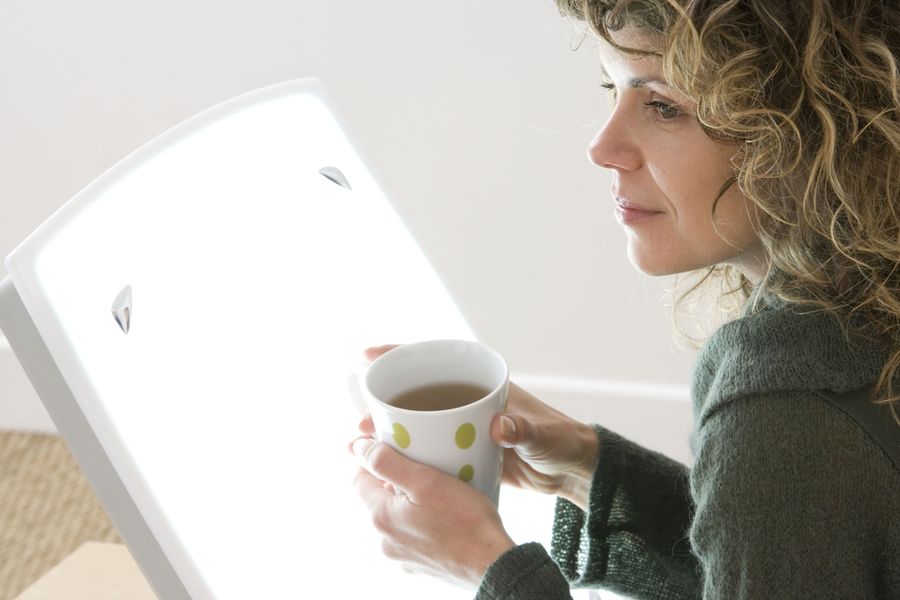
The process starts with placement. The user positions the box at the distance and angle stated by the manufacturer, keeps their eyes open, and lets the light enter indirectly while eating breakfast, reading, or beginning desk work. Staring straight into the panel is not the goal. Receiving the intended light exposure on a repeatable schedule is.
Timing is part of the treatment, not a minor preference. A session used at random hours may not serve the same purpose as a consistent morning routine. The person also needs to verify that the advertised brightness applies at the distance they can actually maintain. A large intensity number on the box means little if it was measured much closer than the planned seating position.
Home routine fit becomes practical quickly. A device may need a permanent place near a chair, breakfast table, or workstation. If setup requires moving furniture, finding an outlet, and clearing a crowded counter every morning, the routine is more likely to fade. The box works only when its instructions and the user’s schedule can coexist.
Who Benefits Most
A light therapy box makes the strongest case when the seasonal pattern, device setup, and daily schedule all point in the same direction.
- A remote or hybrid worker with a predictable first hour: The box can sit beside a regular task such as breakfast, email review, or planning, which makes daily use easier to sustain without creating a separate appointment.
- An adult whose low mood, oversleeping, or loss of energy returns during darker months: A repeated fall-to-winter pattern gives the device a clearer purpose than a vague wish for more motivation, although significant symptoms still warrant professional evaluation.
- Someone who wants a non-drug option as part of a broader care plan: The box may fit alongside psychotherapy, medication, sleep changes, or other clinician-guided care rather than replacing every other approach.
- A person willing to choose for function instead of appearance: A properly specified box that fits the available space and viewing distance is more useful than a stylish lamp whose intensity, UV filtering, or positioning requirements are unclear.
The Real Downsides
The first downside is that the device demands consistency. A light box is not a passive room accessory. It takes up space, needs correct positioning, and must be used at the right time often enough to judge whether it helps. People with rotating shifts, travel, or chaotic mornings may find the obligation harder than expected.
The second downside is product uncertainty. Mayo Clinic notes that light boxes are not regulated by the Food and Drug Administration for SAD treatment. It advises choosing a device made for SAD, checking that it filters most or all UV light, and following the stated distance. Mayo Clinic also recommends professional guidance for people with bipolar disorder or eye problems because timing and exposure may require added care.
A light box is also a weak choice when the problem is not clearly seasonal. Persistent fatigue, low mood, disrupted sleep, or loss of interest can have many causes. Buying a lamp before considering those causes may delay a more useful evaluation. Severe or worsening symptoms need professional care, not another device purchase.
Cost and Commitment Factors
The purchase price is only one part of the commitment. The buyer is also committing space, morning time, and attention to correct use. A larger panel may be easier to receive light from while working, but it can dominate a small desk. A compact model may store or travel more easily, yet require tighter control of distance and angle.
Purchase value also depends on information quality. Look for a clear statement of light intensity at a specific distance, UV filtering, manufacturer instructions, warranty terms, and a return window long enough to assess practical fit. Decorative features matter less if the device cannot be positioned correctly in the place where it will be used.
The lowest-friction option is usually the one that can remain set up. A lamp stored in a closet avoids clutter but adds a daily setup step. A box that stays beside an existing morning activity asks less of an inconsistent winter routine, even if it is not the smallest or most attractive model.
How to Decide Whether a Light Therapy Box Is Worth It
A light therapy box can be worth it when symptoms return in darker months, a suitable device can stay in a fixed morning location, and the user is ready to follow the instructions consistently. The trade-off is a daily routine without a guaranteed result. For significant symptoms, the purchase makes more sense as part of a conversation with a health care professional than as a self-diagnosis.
It is probably not worth it as a general energy gadget for someone whose fatigue has no seasonal pattern, whose schedule changes constantly, or whose space makes correct positioning unrealistic. In that situation, the device may become unused decor, while another evaluation or treatment path may address the problem more directly.
The factor readers commonly overlook is home routine fit. Brightness, panel size, and controls matter, but none create value if the box cannot be used at the required distance during a repeatable morning activity. A capable device that disrupts the household routine is a poorer buy than a simpler one that can remain in place and be used correctly.
Is a Light Therapy Box Worth It for Seasonal Wellness?
Yes, it can be worth it for a person with a recurring winter pattern, an appropriate UV-filtered device, and a morning routine that supports regular use. It is less convincing as a broad wellness purchase for ordinary dislike of dark mornings or unexplained fatigue. Before buying, identify the exact place, activity, and time that would anchor daily use, then discuss significant seasonal mood symptoms or safety concerns with a health care professional.
We created this article in conjunction with AI technology, then made sure it was fact-checked and edited by a TopicTangent editor.