

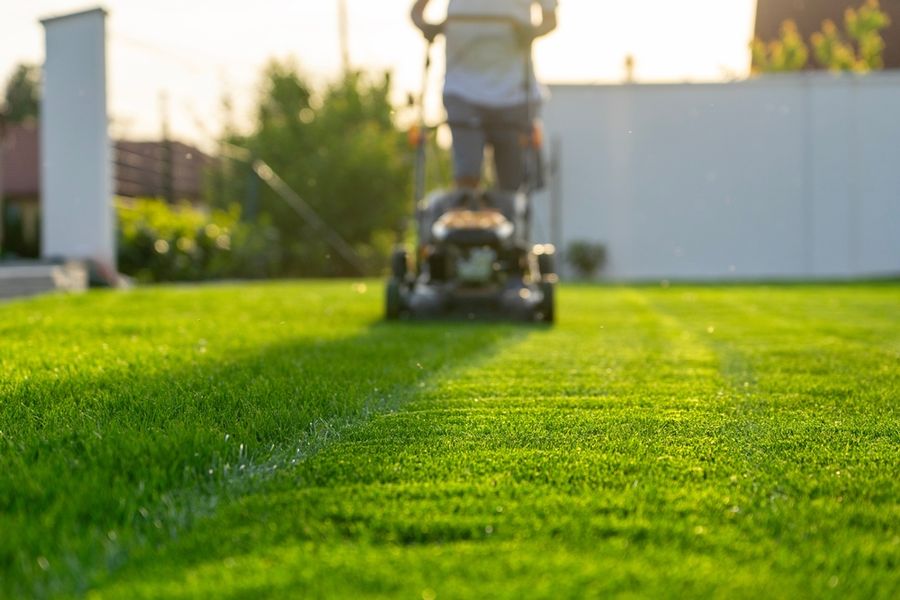
Every spring, the lawn mower aisle gets harder to sort through because battery technology has improved enough to make gas feel optional for some buyers but not others. The marketing for each power type sounds convincing on its own terms, which means you can read three different articles and come away with three different answers. The right choice depends almost entirely on four things specific to your yard and how you use the machine.
Our Take
Our editorial position is this: for most suburban homeowners with a lot under half an acre and relatively flat terrain, a battery mower is now the better default choice. The maintenance burden on gas machines is real, the runtime limitations on current battery models have narrowed considerably, and the total cost gap has closed enough that the convenience trade-off tips toward battery for the majority of buyers. The criteria below explain where that recommendation holds and where it doesn't.
The 4 Criteria That Actually Matter
Most buying guides compare a dozen features. Four of them actually determine whether a mower works for your yard and your habits. The rest are secondary.
Criterion 1: Lot Size and Terrain
This is the single factor that disqualifies options fastest. Battery mowers running on 40V to 60V platforms can typically handle a quarter to a half acre on a single charge under normal conditions. Higher-voltage platforms (60V and 80V) push that ceiling closer to three-quarters of an acre in some configurations, but real-world performance varies with grass thickness, moisture, and cutting height. If your lot is over half an acre, battery runtime becomes a genuine constraint rather than a minor inconvenience.
Slope matters just as much as size. Self-propelled gas mowers have more consistent torque on inclines, and their power doesn't taper as a fuel tank drains the way battery performance can thin out as a charge depletes. On steep grades or heavily uneven terrain, gas machines are more reliably consistent. A flat suburban lot is a different picture entirely.
Corded electric mowers (plug-in, not battery) are worth mentioning here only to be set aside. They're inexpensive and consistent, but the cord is a real physical constraint that makes them impractical for most lawns beyond a small flat area with an accessible outlet. For anything larger than a small urban plot, they're more of a frustration than they're worth.
Quick test: Walk your lot and estimate its size and grade. If it's under half an acre and mostly flat, battery is a viable primary candidate. If it's larger or has significant slopes, note that before moving to the next criterion.
Criterion 2: Your Actual Maintenance Tolerance
Gas mowers require oil changes, air filter replacements, spark plug checks, fresh fuel (or fuel stabilizer for off-season storage), and occasional carburetor attention. None of these tasks is difficult, but each one is friction, and friction adds up. In our experience reviewing homeowner complaints about outdoor power equipment, neglected maintenance is the leading cause of gas mower failures that get written off as "the mower just stopped working."
Battery mowers have essentially no seasonal maintenance. Sharpen the blade once a year, keep the deck clean, and store the battery properly in cold months. That's the list. For buyers who want to mow and put the machine away without thinking about it again until next week, that difference is meaningful and consistent across the life of the product.
If you enjoy maintaining small engines and already have a gas can and the tools for it, this criterion is neutral. If the idea of winterizing a small engine is something you've historically skipped, battery eliminates the problem entirely.
Quick test: Think about what you did with your last gas-powered outdoor tool at the end of the season. If the honest answer is "nothing," weight maintenance tolerance heavily in your decision.
Criterion 3: Upfront Cost vs. Long-Term Cost
Battery mowers carry a higher upfront price than comparable gas models in most cases, primarily because the battery pack is expensive to manufacture. A mid-range self-propelled gas mower typically runs $300 to $450. A comparable battery mower from a reputable brand runs $400 to $600, with the battery included. That gap is real.
What changes the math is the cost of gas and oil over time, plus the occasional tune-up or repair. Gas costs vary by region and year, but they add up across a full mowing season. Battery mowers cost a small amount in electricity per charge. Over a three-to-five-year ownership horizon, the gap between total gas costs and total electricity costs is noticeable, though not dramatic for most homeowners.
Where battery costs sting is in the battery ecosystem. If you commit to one brand's voltage platform, replacing or expanding your battery inventory means staying in that ecosystem. A battery pack for a premium platform can run $150 to $200 on its own, so buying into a brand that also makes your trimmer and blower, and sharing batteries across tools, is a real financial advantage worth planning around.
Quick test: Check whether you already own any battery-powered outdoor tools, and if so, which platform. Matching your mower to an existing battery brand can meaningfully offset the higher upfront cost.
Criterion 4: Noise and Storage Constraints
Gas mowers operate at a noise level that typically requires hearing protection for the operator and is clearly audible to neighbors at typical lot distances. Battery mowers are substantially quieter, enough so that early morning or evening mowing becomes practical without creating friction with neighbors. This is a quality-of-life factor, not a performance one, but for buyers in dense suburban neighborhoods or HOA communities, it's a real consideration.
Storage matters for smaller properties too. Battery mowers are often lighter and more compact than equivalent gas models, with some designed to stand upright for vertical storage. If your garage or shed space is limited, the physical footprint and weight of the machine may actually influence your choice in a way that doesn't show up in spec comparisons.
Quick test: Check whether your storage space has good ventilation and fuel storage considerations. Gas mowers need ventilated storage and careful fuel handling; battery mowers have no such restrictions.
What Most People Get Wrong
The most common mistake is treating battery technology as it was five years ago. Early battery mowers were legitimately underpowered and had runtime limitations that made them impractical for anything beyond a small yard. That's no longer the case for the current generation of 60V and 80V platforms. Buyers who haven't looked at battery options recently are often comparing against an outdated version of the product.
The second mistake is buying a gas mower as a default because it's what they grew up with, without running the actual math on their lot size and usage habits. Gas is the right answer for specific situations, but it's not the universal right answer it once was. We've seen homeowners with small, flat, quarter-acre lots buy heavy self-propelled gas machines and spend more time maintaining them than they would have spent mowing with a simpler battery model.
Three Situations, Three Different Right Answers
If you're mowing a flat half-acre suburban lot and already own a battery trimmer and leaf blower on the same platform: Match your mower to that platform and share the battery packs. The convenience of a unified system across all your outdoor tools is worth the modest upfront premium, and your existing batteries give you charging flexibility without buying new ones.
If you're mowing a hilly three-quarter-acre lot with patches of thick, overgrown grass that hasn't been maintained consistently: Gas is the more reliable choice here. Consistent torque on inclines and the ability to refuel in 60 seconds rather than waiting for a charge cycle matters on demanding terrain.
If you live in a townhouse with a small backyard, an HOA that has posted noise restrictions, and a one-car garage: Battery or corded electric is the clear call. A lightweight 40V battery push mower handles a small plot on a single charge with minimal storage footprint and quiet enough operation to mow on a Sunday morning without complaints. You don't need more machine than the job requires.
Frequently Asked Questions
Can a battery mower really handle thick or wet grass?
Current 60V and 80V battery platforms handle typical thick or slightly damp grass reasonably well, though performance degrades in very wet conditions, as it does with gas mowers. The difference narrows considerably compared to earlier battery technology. For consistently difficult cutting conditions (heavy wet grass every week, very tall overgrown areas), gas still has a practical edge.
How long do battery mower batteries last before needing replacement?
Most lithium-ion battery packs for outdoor power equipment are rated for several hundred charge cycles before capacity degrades noticeably. With normal seasonal use, most buyers will see five or more years of reliable performance from a quality battery pack. Storing batteries in a cool, dry location between seasons extends their useful life.
Is a corded electric mower worth considering at all?
For a very small, flat yard (roughly 1,500 to 2,000 square feet) near an accessible outdoor outlet, a corded mower is a legitimate low-cost option. They're simple, consistent, and inexpensive. Beyond that footprint, the cord becomes a real practical problem, and the trade-off stops making sense compared to a battery model.
Compare With Confidence
As you compare specific models, run each one against the four criteria here: lot size and terrain, maintenance tolerance, total cost over time, and practical storage and noise constraints. The power type that checks out on all four for your actual situation is the one worth buying.
We created this article in conjunction with AI technology, then made sure it was fact-checked and edited by a TopicTangent editor.