

Most homeowners think of insulation as a simple fix: add more, pay less. In reality, the relationship between insulation and energy costs is far more nuanced. Heat moves through a home in multiple ways, and material choice is only one part of the equation. Money spent on insulation upgrades can deliver meaningful savings but only when the underlying causes of heat loss and heat gain are addressed. Understanding how insulation functions as part of a larger system is what separates effective improvements from expensive disappointments.
The Short Version
Insulation slows the movement of heat through your home's walls, floors, and ceiling. It is rated by R-value: the higher the number, the better it resists heat flow. But R-value alone does not determine performance.
Air leaks, where the insulation is placed, and installation quality all affect how much energy you actually save. In the United States, the Department of Energy divides the country into climate zones that guide how much insulation different homes need. If you are adding or updating insulation, the attic is almost always the highest-impact place to start.
How Insulation Actually Works
Heat moves in three ways: conduction (through solid materials), convection (through air movement), and radiation (through electromagnetic waves). Insulation primarily fights conduction and convection. A fiberglass batt in your wall slows heat from traveling through the framing. A sealed layer of spray foam blocks both heat transfer and airflow at the same time.
The standard measure for insulation performance is R-value, which stands for thermal resistance. A material with an R-value of 38 resists heat flow twice as well as one rated R-19. Every insulation product sold in the U.S. carries this rating, and the Department of Energy publishes recommended R-values by climate zone and location in the home. A home in Minnesota needs significantly more resistance than one in Georgia, because the temperature difference between inside and outside is larger and lasts longer each year.
What most guides leave out is that the R-value assumes the insulation fills its space completely and has no interruptions. Wood framing, electrical boxes, and gaps in coverage all create thermal bridges, paths of least resistance where heat travels faster than the surrounding material. A wall rated at R-15 with standard stud framing loses some of that performance to the studs themselves, which conduct heat more readily than fiberglass or mineral wool.
Air sealing is a related but separate issue. Insulation slows conduction; it does not stop air from physically moving through cracks, gaps around pipes, or unsealed attic bypasses. Drafts carry heat in or out directly, bypassing whatever insulation is in the wall beside them. This is why two homes with identical R-values can have dramatically different energy bills.
The 5 Factors That Drive Insulation Performance
Factor 1: Location in the Home
The attic is where most homes lose the most heat, because warm air rises and escapes through ceiling gaps before insulation can slow it. Walls and floors matter too, but in most existing homes, attic upgrades deliver the fastest payback. Basements and crawl spaces are the second priority, especially in colder climates where pipes and ductwork run through unconditioned space.
Factor 2: R-Value for Your Climate Zone
The U.S. uses eight climate zones, ranging from the humid South (Zone 1) to the far northern states and Alaska (Zone 7-8). Recommended attic R-values range from R-30 in the warmest zones to R-60 or more in the coldest.
Installing the right R-value for your zone is not guesswork: the Department of Energy publishes zone maps and minimum recommendations by location and building section. Using a map from your state's energy office takes about five minutes and tells you exactly what your attic floor should target.
Factor 3: Installation Quality
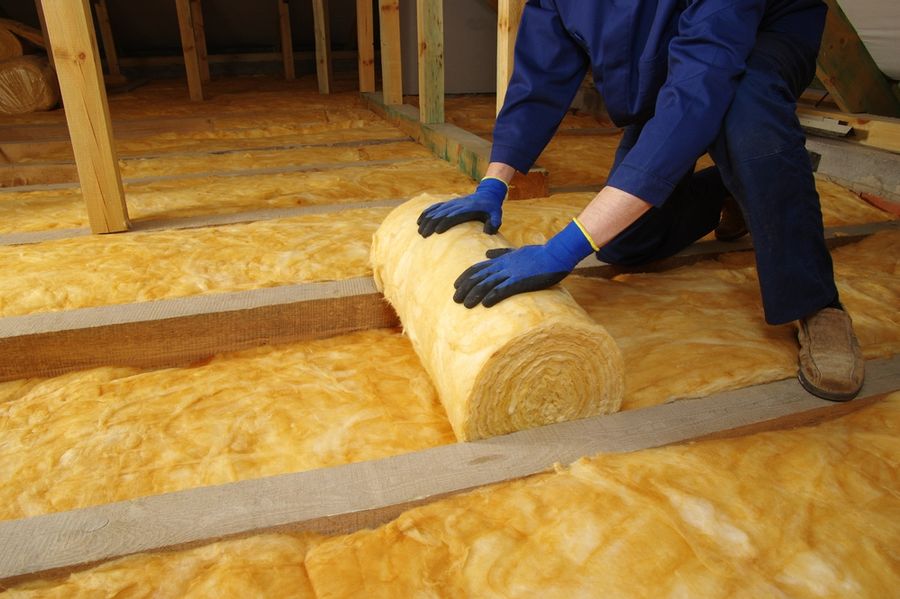
Insulation installed with gaps, compressed into spaces too small for it, or left with voids around wiring and fixtures performs well below its rated R-value. Compressed fiberglass batts, for example, lose a significant portion of their rated resistance. A professional installation with proper coverage is more valuable than upgrading to a higher R-value product with poor coverage. This is one of the few places where paying more for labor rather than material makes sense.
Factor 4: Air Sealing
Adding insulation on top of unsealed gaps is one of the most common and costly mistakes in home energy upgrades. Before any insulation is added to an attic, penetrations around light fixtures, plumbing vents, and top plates should be sealed with caulk or foam. This step is often less expensive than the insulation itself and can improve results by as much as sealing does independently.
Factor 5: Existing Conditions
Old insulation doesn't always need to be removed before new material is added. Blown-in cellulose or fiberglass can often be added on top of existing batts. But if old insulation is wet, moldy, or compressed past usefulness, installing over it reduces the effective R-value of the entire assembly. A quick inspection before installation prevents paying for an improvement that sits on a failing foundation.
What Most People Get Wrong
"More insulation is always better." The reality: insulation follows a law of diminishing returns. Going from R-11 to R-30 in an attic has a large effect on energy bills. Going from R-49 to R-60 has a much smaller one. At some point, the cost of added material outpaces the savings it generates. The right target is the recommended level for your climate zone, not the maximum available product.
"Spray foam is always the best option." The reality: spray foam is excellent in specific applications, particularly for sealing irregular surfaces, rim joists, and spaces where both air sealing and thermal resistance are needed in one step. But it costs significantly more per square foot than blown-in fiberglass or cellulose, and in an open attic floor where air sealing has already been addressed, blown-in insulation often delivers comparable results at a fraction of the cost.
What This Means for You
The right insulation decision depends almost entirely on what your home lacks right now, not on what is most commonly recommended. Here are three scenarios that reflect the real range of situations homeowners face.
If you live in an older home (built before 1980) with high heating or cooling bills and no recent insulation upgrades, air sealing the attic floor and adding blown-in insulation to reach your zone's recommended R-value is almost certainly your highest-return project. These homes typically have minimal attic insulation and zero air sealing at ceiling penetrations. The combination of both improvements, not just insulation alone, is what produces meaningful bill reductions. Budget for both when you get quotes.
If you are in a newer home (built after 2000) that already meets code minimums and you are still seeing high energy costs, insulation is probably not your primary problem. Code-built homes have reasonable baseline insulation. Your issue is more likely duct leakage, window performance, or HVAC inefficiency. A professional energy audit with a blower door test will show you where conditioned air is actually escaping, which may or may not be through the building envelope.
If you are in a hot climate (Zones 1 through 3, covering much of the South, Florida, and parts of the Southwest), radiant barriers and reflective insulation in the attic deserve a place in your evaluation alongside traditional materials. In climates where cooling dominates the energy budget, reducing radiant heat gain through the roof deck can outperform adding more R-value to an already-adequate attic floor.
Frequently Asked Questions
How do I know if my current insulation is adequate?
The easiest check is to look in your attic. If you can see the ceiling joists above the insulation, you almost certainly need more. The insulation should cover the joists completely and reach a depth appropriate for your climate zone. A free online R-value calculator from the Department of Energy can tell you your target depth for common materials like fiberglass batts or blown-in cellulose.
Does insulation work differently in summer versus winter?
The physics are the same: insulation resists heat flow in both directions. In winter, it keeps the heat inside. In summer, it slows outdoor heat from moving into the cooled living space. The same R-value that helps with heating costs helps with cooling costs, which is why insulation upgrades show savings year-round in most U.S. climates.
Can I install insulation myself, or do I need a contractor?
Adding blown-in insulation to an attic floor is one of the more accessible DIY projects for a motivated homeowner, and many home improvement retailers rent the blowing equipment when you purchase material. Air sealing, however, requires identifying and sealing attic bypasses that are easy to miss without experience. If you are doing both, hiring a contractor for the air sealing portion and DIYing the blown-in layer on top is a reasonable middle approach.
Are there tax credits or rebates available for insulation upgrades?
Federal tax credits for insulation improvements have been available under energy efficiency incentive programs in recent years, typically covering a percentage of material costs up to an annual cap. State and utility rebate programs often stack on top of federal credits. The amounts and eligibility rules change, so checking directly with your state energy office and utility provider before starting a project is the most reliable way to know what applies to you.
The Bottom Line on Insulation
The single most important thing to understand about home insulation is that R-value is a material rating, not a whole-home guarantee. Installation quality and air sealing determine whether that rating translates into actual savings. Homeowners who treat insulation as a product to buy rather than a system to get right consistently underperform the projected energy savings. Get an energy audit, seal the leaks first, then choose your insulation material based on your climate zone and your budget. That sequence, more than any specific product choice, is what produces real results.
We created this article in conjunction with AI technology, then made sure it was fact-checked and edited by a TopicTangent editor.