

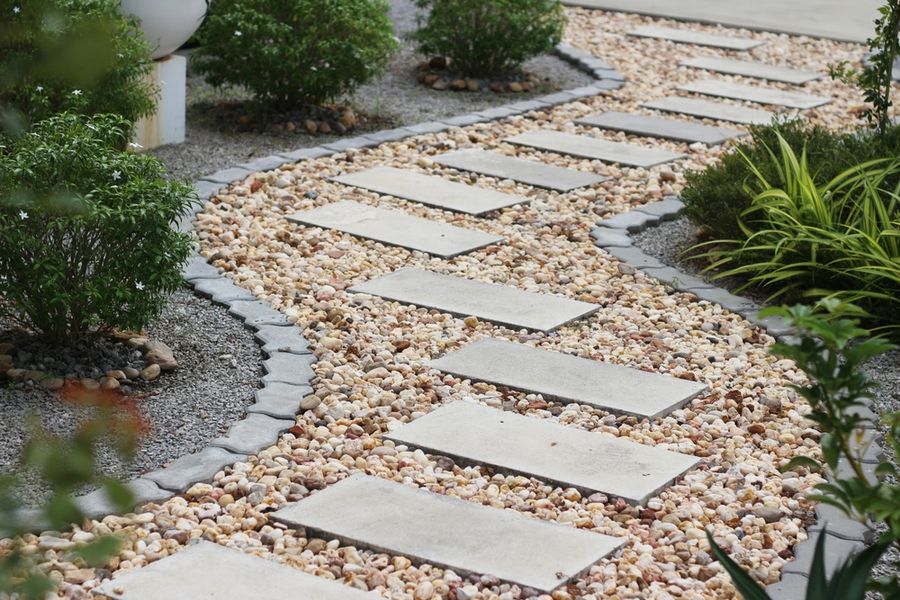
Choosing a garden path surface becomes harder once gravel, bark, and stepping stones are compared side by side. Each material offers a different mix of appearance, stability, drainage, and upkeep, so the most attractive option may not suit everyday use. Foot traffic, wheelbarrow access, rainfall, and seasonal maintenance all shape the decision. A practical choice starts with how the path will function, not simply how it looks on installation day.
What Actually Decides Which Surface Wins
Most comparison guides rank path materials by appearance first, but appearance rarely causes regret two years later. The criteria below start with how the path gets used and how water moves through the site, since those two factors decide whether a surface stays intact or turns into a rutted mess. Cost and installation effort matter, but only once those ground rules are set.
The Four Things That Actually Decide Your Path
Most comparison sites list ten or more factors for picking a path material. In practice, only a handful actually decide whether the walkway holds up or needs redoing in two years.
1) How the Path Gets Used
A path that connects a driveway to a front door sees different wear than a meandering trail through a flower bed. Daily foot traffic, strollers, wheelbarrows, or a dog running the same route wears down loose material fast and can shift stepping stones out of alignment. A once-a-week garden stroll tolerates a much softer, more informal surface.
Loose crushed stone can be difficult to push a wheelchair or stroller across, especially in larger, angular sizes. Flat pavers or flagstones spaced close together give a firmer, more predictable surface for frequent, heavier use.
Quick test: If the path will see a stroller, wheelbarrow, or mobility device more than a couple of times a week, that alone should push the decision toward a firmer, more stable surface.
2) Drainage and Local Climate
Water behavior underfoot matters as much as looks. A surface that pools water becomes slick, breeds mold, or erodes within a season, especially in regions with heavy seasonal rain or repeated freeze-thaw cycles.
Crushed stone and gravel are permeable, so rainwater drains through rather than collecting on top, which reduces standing water and erosion risk. Wood chips hold moisture longer, which helps nearby plants but can turn slick or start growing mold in consistently damp, shaded spots. Pavers or flagstones need a compacted base of stone and sand underneath, or the gaps between them will hold water and heave during freezing weather.
Quick test: Walk the proposed route the day after a heavy rain. If water is still standing, that spot needs a permeable surface or a properly built base before anything else matters.
3) How Much Upkeep You're Willing to Do
Every path surface needs some ongoing attention, but the type and frequency differ a lot. Bark and wood chips break down over time and need periodic refreshing to keep their look and function, often on a yearly or every-other-year cycle. Crushed stone does not decompose, but foot traffic can push it out of place, so it needs occasional raking and edging to stay contained.
Pavers and flagstones ask the least in ongoing labor once they are set, though weeds and grass can creep into the gaps and need pulling or trimming. A homeowner who dislikes seasonal yard chores should weight this criterion heavily, since it is the one that shows up every year rather than once at installation.
Quick test: Think about the last outdoor task a homeowner put off for months. If that describes raking or replenishing groundcover, a low-upkeep option like set pavers is worth the higher upfront effort.
4) Installation Effort and Site Prep
This one is easy to underestimate. Loose material like wood chips or crushed stone can often go down in a single weekend with basic tools, minimal digging, and no special skills. A paver or flagstone path needs more site prep, including excavation, a compacted base layer, and careful leveling so the finished surface sits flush and does not become a tripping hazard.
A homeowner comfortable with a shovel and a weekend of labor can usually manage any of these three options as a DIY project. Anyone short on time or physical ability may want to hire the excavation and base work out, even if they finish the surface layer themselves.
Quick test: If a homeowner is not willing to dig several inches down and compact a base layer, that rules out a durable stepping stone path unless a professional installs it.
The Assumption That Costs the Most Regret
The most common mistake is treating any loose groundcover as permanent and maintenance-free simply because it does not need watering. Loose stone does not break down, but it drifts into lawns and garden beds over time and needs occasional topping off and raking back into place. Homeowners who skip a border or edging along the path are usually the ones who end up chasing stray stone out of the grass every summer.
A related misconception is choosing wood chips for a heavily used connector path purely because it costs less upfront. That kind of groundcover works best in low-traffic, shaded garden settings where it can enrich the soil as it breaks down. On a daily-use route, it compacts, washes out in heavy rain, and needs replacing far more often than a firmer surface would, which erases the early savings within a couple of seasons.
The Right Surface Depends on Who's Walking It
If you're raising kids and a dog who use the side yard path daily in all weather: prioritize a stable, low-shift surface. Loose crushed stone migrates under running feet and paws, so a tightly spaced paver or flagstone layout holds up better and stays safer when wet.
If you're a retired couple in a wet climate connecting a patio to a garden shed: prioritize drainage and a stable walking surface over decoration. A well-based paver or stone path drains fast and will not shift underfoot the way loose stone can after repeated freeze and thaw cycles.
If you're working with a tight budget and want an informal accent path through flower beds: prioritize low upfront cost and easy DIY installation. Wood chips fit that goal well, since a homeowner can lay them in an afternoon without renting equipment or hiring a crew.
Where the Real Expense Hides
The material itself is rarely the biggest cost driver in a path project. Site prep, including excavation, hauling away old sod or soil, and building a compacted base layer, often takes more time and effort than spreading the surface material itself. Paths that need a firm, level base for accessibility or heavy use naturally require more labor than a loose groundcover laid over existing ground.
Ongoing cost also hides in replacement cycles rather than the initial purchase. A groundcover that needs yearly refreshing adds up over several years even though each individual refresh feels minor, while a surface that requires more work at installation can even out or come out ahead over the long run because it is not repeated. Delivery, edging materials, and how far the material has to travel from the supplier also shift the total more than most homeowners expect going in.
Frequently Asked Questions
Q: Can a paver path be installed over an existing lawn without killing the grass? Yes, as long as the stones sit flush with the surrounding grade and the excavation for each one is limited to its footprint. The grass around and between properly placed stones keeps growing normally, since only the small area under each stone is disturbed.
Q: Does loose stone attract more weeds than a wood-based groundcover? Both allow some weed growth over time, but crushed stone installed over a proper base and edging tends to resist weeds better long-term, since it does not break down into a nutrient-rich layer the way wood chips do. Neither is weed-proof without a barrier layer underneath.
Q: Which surface holds up best in a region with heavy rain? A permeable, well-based surface handles heavy rain most reliably, since standing water is what damages a path over time rather than the rain itself. Loose stone drains well on its own, while a stepping stone or paver path needs a properly compacted base to achieve the same result.
We created this article in conjunction with AI technology, then made sure it was fact-checked and edited by a TopicTangent editor.