

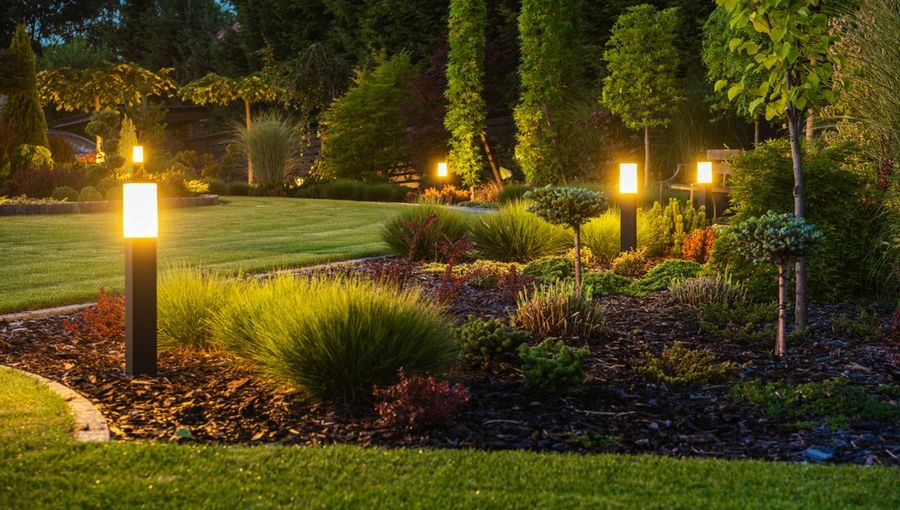
Running electrical wire through your yard to power landscape lighting is expensive, invasive, and usually requires a licensed electrician. Solar-powered fixtures promise the same finished look without any of that work. But the gap between what the packaging shows and what actually lights your walkway at 10 p.m. in January is real, and most buyers don't realize it until after installation. Understanding where solar lighting genuinely earns its price and where it lets you down is key.
What Solar Landscape Lighting Actually Is (and Isn't)
Solar landscape lighting uses small photovoltaic panels, usually built directly into the fixture, to charge an internal battery during the day. After dark, that stored energy powers LED bulbs. Most fixtures turn on automatically at dusk and off at dawn, or include a motion sensor that triggers them on demand. No wiring, no electrician, no change to your electric bill.
The misconception worth clearing up: these fixtures are not a like-for-like replacement for hardwired outdoor lighting. Hardwired low-voltage systems deliver consistent brightness regardless of weather, season, or how much sun hits your yard that day. Solar fixtures deliver variable output. A cloudy week in November will dim them noticeably. That's not a defect to be fixed with a better brand; it's a fundamental trade-off of the technology.
How It Works in Practice
Installation is genuinely as simple as it looks. Most solar pathway lights stake directly into the ground, require no assembly beyond unboxing, and are ready to use the same day. In testing these fixtures across different yard conditions, the biggest variable isn't fixture quality: it's panel placement. A solar light installed in partial shade underperforms one in full sun, even when both are the same model.
Runtime varies by season and geography. In summer, a well-placed fixture in a sunny region can run 6 to 12 hours per charge. In winter, especially in northern states with shorter days and frequent overcast, expect 3 to 5 hours on a full charge and less after days with poor sun exposure. If your pathway lighting needs to be reliably bright at 11 p.m. in December, solar is the wrong tool for that specific job.
Motion-activated solar security lights are a separate category worth noting. They draw less power in standby mode and deliver a bright burst when triggered, which makes the battery math work better. In practice, these perform more consistently than always-on decorative fixtures because they aren't continuously depleting the charge throughout the night.
Who Benefits Most
The homeowners who get the most from solar fixtures are those using them for accent and ambient lighting rather than relying on them for safety or security output.
- A homeowner who wants to line a front walkway or garden path with soft decorative lighting and doesn't need it to perform identically every night, regardless of the season
- Someone adding ambient lighting to backyard flower beds and borders, and wants to avoid digging trenches or paying for electrical work
- A weekend DIYer who wants to cover a large yard footprint with lighting without the cost or complexity of running hardwired cable to multiple zones
- A homeowner in a Sun Belt state where high annual sun hours keep panel performance consistent enough that winter drop-off is minimal
The Real Downsides
Battery degradation is the hidden maintenance cost. Most solar landscape fixtures use built-in rechargeable cells that degrade after two to three years of daily charge cycles. When a fixture stops holding a charge and never fully recovers brightness, the battery is usually the cause. Some fixtures allow cell replacement; many cheaper ones don't, which means replacing the whole unit. Factor that into the real cost of ownership before buying.
Fixture quality varies more in this category than almost any other outdoor lighting segment. The price range for solar pathway lights runs from $5 to $50 per unit, and that spread reflects real differences in panel efficiency, battery capacity, LED output, and weather resistance. Budget fixtures charge slowly and fail faster. Buying the least expensive option usually means replacing them within a season.
Solar lighting also doesn't work for every yard. Mature tree canopy, north-facing slopes, and homes in the Pacific Northwest or upper Midwest with limited annual sun hours all reduce panel performance in ways no fixture upgrade fixes. If the area where you're placing lights doesn't receive at least four to six hours of direct sunlight per day, output will disappoint regardless of brand.
What You'll Actually Pay
Mid-range decorative solar pathway lights from reputable brands typically run $20 to $50 per fixture. Outfitting a standard walkway with six to eight fixtures costs roughly $120 to $400, depending on style and quality. Installation takes minutes per unit and requires no tools.
Solar-powered floodlights and motion-activated security lights run $50 to $100 per unit at the mid-range. Models with larger panels and higher lumen outputs, which are necessary for security applications, sit at the higher end.
Hardwired low-voltage landscape lighting, for comparison, runs $100 to $200 per fixture plus the cost of a transformer, cable, and professional installation. A full-yard hardwired system can run $2,000 or more, depending on scope. The solar version costs less upfront and involves no installation labor; the trade-off is consistency of output over time.
How to Decide If This Is Right for You
If you want ambient or decorative lighting for pathways, garden beds, or borders, and those areas receive reliable direct sun, solar is the right choice. It installs in an afternoon, costs less than hardwired alternatives, and performs well for that application.
If you need consistent security lighting, reliable brightness through winter, or fixtures that perform identically every night regardless of weather, hardwired fixtures or plug-in low-voltage systems are more dependable. The cases where solar landscape fixtures disappoint are predictable and avoidable if you match the product to the actual job.
Our Take
Solar landscape lighting deserves a clear recommendation for decorative and ambient use, but not as a universal replacement for wired outdoor lighting. The technology has improved enough that mid-range fixtures from established brands genuinely deliver for pathway and garden accent lighting in yards with good sun exposure.
The mistake most buyers make is expecting solar to do what hardwired systems do, and that expectation is where the disappointment comes from. Use it for what it's actually good at: low-stakes, atmosphere-building lighting in sun-friendly spots. For anything where consistent brightness matters, wire it.
Frequently Asked Questions
Do solar landscape lights work in winter?
Yes, but output drops. Shorter days mean less charging time, and cold temperatures reduce battery efficiency. In northern states, fixtures that run reliably for 8 hours in summer may only deliver 3 to 4 hours on a winter night. Choosing fixtures with larger panels and higher-capacity batteries reduces the drop but doesn't eliminate it.
How long do solar landscape lights actually last?
The LED components typically last many years, but built-in rechargeable batteries degrade after two to three years of daily cycling. When a light stops recovering full brightness after a sunny day, battery failure is usually the cause. Spending more upfront on fixtures with user-replaceable batteries extends the useful life considerably.
Can I use these in a shaded yard?
You can place them there, but performance will suffer. Solar fixtures need direct sunlight on the panel to charge effectively, and partial shade during peak hours reduces capacity and shortens runtime after dark. If your yard has significant tree canopy or a predominantly north-facing orientation, hardwired or plug-in low-voltage lighting will serve you better.
The Bottom Line
Before buying anything, walk your yard during midday and note which areas receive at least four to six hours of unobstructed direct sun. Those are the spots where solar fixtures will perform as advertised; place them anywhere shadier, and they'll fall short. That fifteen-minute walk tells you more than any product spec sheet.
We created this article in conjunction with AI technology, then made sure it was fact-checked and edited by a TopicTangent editor.