

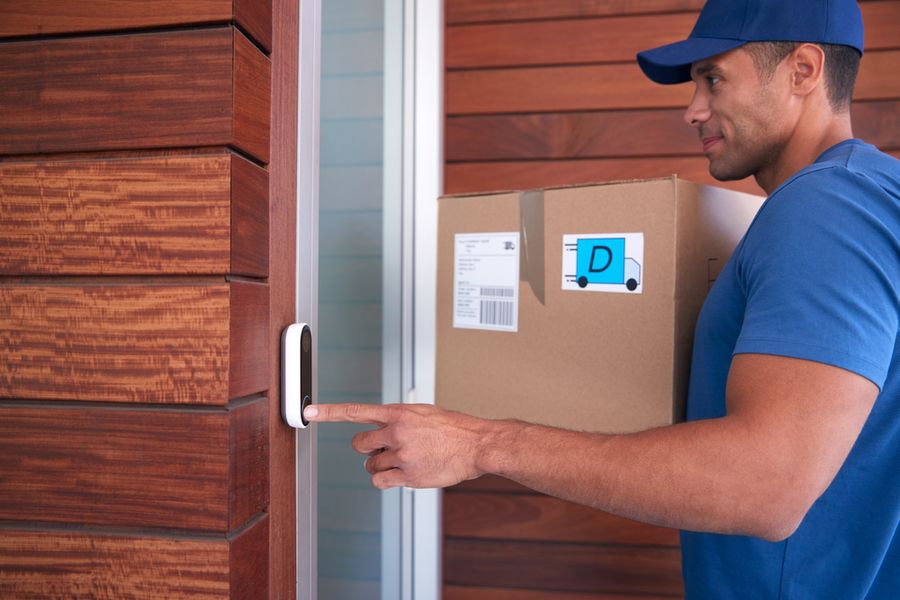
Your front door sees more action than any other entry point in your home, and whoever's on the other side now expects to be seen. Doorbell cameras have evolved from simple security gadgets into practical tools for monitoring deliveries, screening visitors, and keeping an eye on activity around the house. With more models available than ever, choosing the right one can be challenging. Understanding how leading options compare can help you find a doorbell camera that fits your budget, lifestyle, and smart home setup.
Five Doorbells, Decided at a Glance
|
Rank |
Camera |
Best For |
Price |
Subscription |
Power |
|---|---|---|---|---|---|
|
1 |
Ring Video Doorbell Pro |
Alexa households |
Optional (starting at $4.99/mo) |
Battery or Wired |
|
|
2 |
Google Nest Doorbell (Wired) |
Google Home users |
Optional (starting at $10/mo) |
Wired |
|
|
3 |
eufy Video Doorbells |
No monthly fees |
None required |
Wired or Battery |
|
|
4 |
Arlo Essential Video Doorbell |
Video quality |
Optional (starting at $8/mo) |
Wired or Battery |
|
|
5 |
Blink Video Doorbell |
Budget buyers |
Optional (starting at $4/mo) |
Battery or Wired |
1. Ring Video Doorbell Pro: Best for Alexa Households
Ring has earned its dominant market position the old-fashioned way: by building a product that works reliably and integrates seamlessly into the ecosystem that most Americans already live in. The Pro tier of Ring's lineup delivers a head-to-toe field of view that captures packages left on the ground and faces at eye level in the same frame, pre-roll footage that records a few seconds before a motion event triggers, and Alexa integration that pushes the live view to any Echo Show or Fire TV. The hardwired installation is a fair trade for the performance you get.
The honest caveat is the subscription. Ring's cloud storage plans start at $4.99 per month per device, and without a plan, you lose access to recorded video history entirely. Only a live view remains. For households already on Ring Protect Plus, which covers unlimited cameras at a single address, this is a non-issue. For single-doorbell buyers, it's a real cost worth factoring in before purchase. But among wired smart video doorbells, Ring's Pro remains the easiest recommendation for anyone already invested in Amazon's ecosystem.
2. Google Nest Doorbell (Wired): Best for Google Home Users
Google's wired Nest Doorbell earns its place by doing something the competition struggles with: it supports continuous 24/7 recording (with a subscription) rather than relying solely on motion-triggered clips. That means if something happens in the seconds just before the motion sensor fires, you still have it on record, which is a detail that matters when you actually need the footage. The camera's on-device intelligence distinguishes between a person, a package, and a vehicle, which cuts down on notification noise without missing the moments that count.
You'll get the most from this doorbell if Google Home is already the hub of your setup. Google Home Premium subscriptions unlock extended video history and continuous recording; without one, you're working with a shorter event-based window. The wired installation means this isn't a quick weekend swap for everyone, but for a Google household with existing doorbell wiring in place, it's the most coherent integration available. It's also the only pick on this list where smart home and camera platform feel like they were designed together rather than bolted on.
3. eufy Video Doorbell: Best for Skipping Monthly Fees
eufy has built its brand identity around a single differentiator: no mandatory subscription, ever. Where Ring and Nest nudge you toward recurring cloud plans, eufy's Video Doorbell stores footage locally, either on the HomeBase hub that ships with certain bundles or directly to an onboard SD card, at zero ongoing cost. That's not a minor footnote. Over a three-year ownership window, the savings relative to a per-device subscription plan can run into the hundreds of dollars, and you're not dependent on any company's cloud infrastructure staying online or priced the same as it is today.
The trade-off is ecosystem depth. eufy's app is functional but doesn't match the polish of Ring or Google's platforms, and if you're already deep in Alexa or Google Home, the integration will feel secondary rather than native. But for households that don't want a subscription attached to their front door in perpetuity, eufy delivers genuinely competitive video quality, capable motion detection, and the peace of mind that comes from keeping your footage on your own hardware. It's the pick for any buyer who's done the math on long-term ownership costs.
4. Arlo Essential Video Doorbell: Best for Video Quality
Arlo's Essential Video Doorbell makes a strong case for itself on image alone. The combination of a wide field of view, HDR processing, and color night vision means that what you see on screen looks more like a photo than a security camera still, which makes a meaningful difference when you're trying to identify a face or read a delivery label after dark. Arlo's motion zones let you tune out sidewalk foot traffic and keep the camera's attention focused on your actual entryway, cutting false alerts without missing the events that matter.
The wire-free battery option makes this accessible for homes without existing doorbell wiring, though battery life varies considerably based on how active your entryway is. Arlo's cloud plans unlock full video history, and the platform supports multiple smart home ecosystems, making it the most flexible pick on this list for buyers who haven't committed to a single hub. It isn't the most affordable option here, but for anyone who considers video quality non-negotiable and doesn't want to be locked into one ecosystem, Arlo earns the premium.
5. Blink Video Doorbell: Best for Budget-Conscious Buyers
Blink, Amazon's more affordable camera brand, offers a genuine entry point into smart doorbell ownership without asking you to spend like it's a renovation. The Blink Video Doorbell delivers two-way audio, motion-triggered HD video, and the flexibility to run on battery or wire into existing doorbell wiring. This is setup versatility that most competitors at this price don't match. It integrates with Alexa natively, so Echo Show households get doorbell view notifications without any extra configuration.
The asterisk: cloud storage requires a Blink Subscription Plan, and without one, recorded clips won't save to the cloud. The workaround is practical, though. Plugging a USB flash drive into the optional Sync Module 2 enables local storage at no ongoing cost, making Blink subscription-optional rather than subscription-required. If your priority is a functional, smart-home-connected video doorbell installed without a large upfront investment or recurring bill, Blink deserves serious consideration before you spend twice as much on a brand-name alternative.
What to Know Before You Buy at Your Front Door
The power source is your first decision. Hardwired doorbells draw from your home's existing doorbell wiring and require a compatible transformer. If that infrastructure isn't in place, you're looking at installation work before the camera ever goes up. Battery-powered models eliminate that barrier entirely but introduce recharge intervals that vary widely by entryway traffic.
Subscriptions compound quickly. With monthly subscriptions stretched over a multi-year ownership window or across multiple cameras, that number climbs fast. eufy is the only major brand on this list that makes local-only storage genuinely viable with no ongoing cloud fees.
Ecosystem fit shapes daily usability. If your home runs on Alexa, Ring or Blink will feel native. For Google Home households, Nest Doorbell is the cleaner integration. Arlo is the strongest cross-platform option if you're not locked into a single ecosystem.
Video quality isn't equal across price points. Marketing specs are unreliable shorthand. Looking at user-uploaded real-world footage on forums or YouTube before purchase gives a more honest read than spec sheets alone.
Check Wi-Fi strength at the installation point. A doorbell camera's performance ceiling is set by signal quality at the door. If your router is on the opposite side of the house, a Wi-Fi extender may be necessary regardless of which model you choose.
The One We'd Install at Our Own Front Door
Editor's Pick: eufy Video Doorbell
For most households (particularly those not already locked into a specific smart home ecosystem), the eufy Video Doorbell is the most defensible purchase. The no-subscription model isn't just a budget move; it's a fundamentally better ownership experience. You're not managing a recurring charge, you're not locked out of your video history if a plan price increases, and your footage stays on hardware you control. The video quality is competitive, the setup is straightforward, and the long-term math is difficult to argue with.
Ring remains the better choice for Alexa-first households that want the deepest integration, and Nest earns the recommendation if Google Home is your platform. But for the buyer without strong ecosystem ties shopping for their first video doorbell, eufy is where we'd start.
Your Front Door Deserves a Smarter Decision
Every camera on this list does the job. The real differentiation comes down to how much you want to pay over time, which smart home ecosystem you're already in, and whether continuous recording or wire-free flexibility matters more for your specific setup.
The market has matured to the point where there's no bad pick among these five. Only choices that fit your situation better than others. Decide on power source and subscription tolerance first, and the right doorbell practically selects itself.
We created this article in conjunction with AI technology, then made sure it was fact-checked and edited by a TopicTangent editor.